

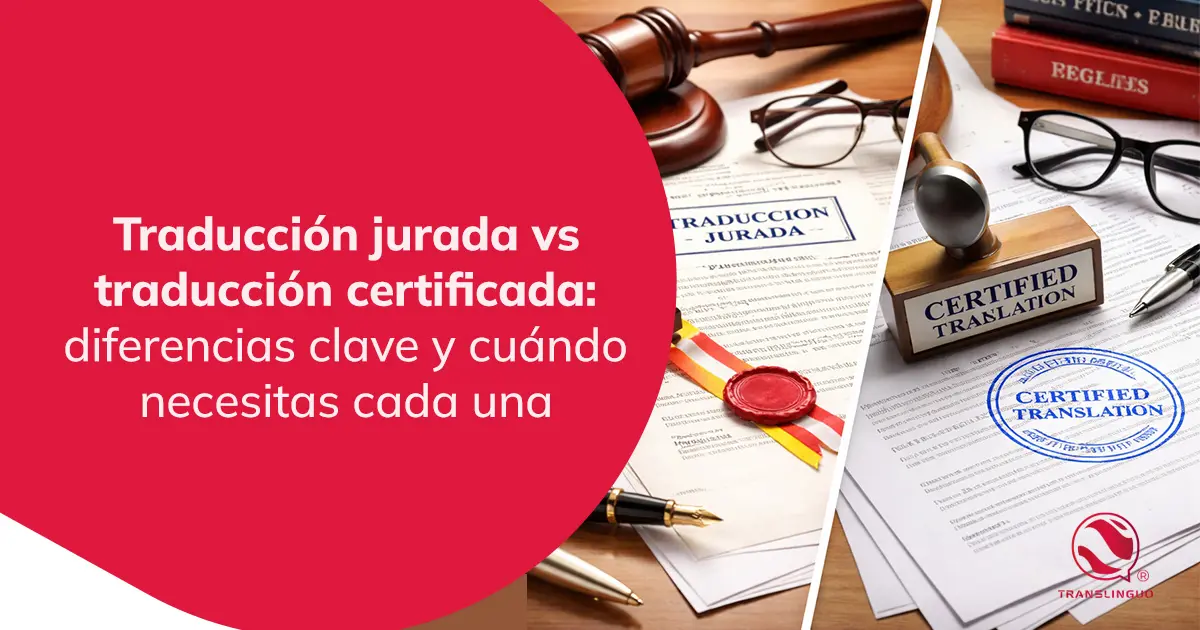
Sworn Translation vs Certified Translation: A Key Difference You Need to Know
Sworn translation and certified translation are often confused by both businesses and individuals At first glance, both terms may seem to refer to “official” or “valid” translations. However, there are important legal, formal and practical differences to understand before requesting a translation service.
This confusion can lead to administrative delays, documents being rejected by official bodies, or additional costs if the translation has to be redone. That’s why it’s important to understand what is a sworn translation, when it is required and when a certified translation is sufficient, so you can make the right choice from the start.
In this context, working with a specialist translation agency such as Translinguo Global means receiving professional advice from the outset, helping to avoid errors and ensuring that the type of translation requested is appropriate for the specific procedure.
What Is a Sworn Translation and What Legal Validity Does It Have?
A sworn translation is an officially recognised translation carried out by a sworn translator who has been appointed and authorised by the relevant authority. In Spain, these translators are ac credited by the Ministry of Foreign Affairs, European Union and Cooperation.
This type of translation is certified by the sworn translator as a complete and accurate translation of the original document, with their signature and official stamp. This gives the translation legal validity before official bodies, allowing it to be accepted as an official translation of the original document.
For this reason, sworn translation is essential for administrative, legal and academic procedures where an official translation is required. In this context, it is always advisable to make sure you work with an official translation agency that has direct contact with sworn translators for the language you need. This, together with the correct guidance, will help ensure that your translation is valid dfor submission to the relevant authorities.
What Documents Need a Sworn Translation?
There are many documents for which sworn translation is not simply a matter of choice but a clear legal requirement. The most common are:
Birth, marriage or death certificates
University degrees and academic transcripts
Court judgments and legal decisions
Notarial powers of attorney and deeds
Immigration and residency documents
As explained in our sworn translation service, these documents are only valid when the translation is carried out by an officially recognised sworn translator. Contact our sworn translators and make sure your translation meets all official requirements.
What Exactly Is a Sworn Translation and Why Is It Legally Valid?
A sworn translation is an official translation carried out by a sworn translator who has been appointed and accredited by the relevant authority. In Spain, these translators are authorised by the Ministry of Foreign Affairs, European Union and Cooperation, allowing them to sign and stamp translation that have legal validity.
This signature and stamp certify that the translation is a complete and accurate representation of the original document, giving it validity before courts, universities, notaries and public authorities. According to the Spanish Ministry of Foreign Affairs’ official information on sworn translators, a translation cannot be considered a sworn translation unless it meets this formal requirement.
When Do I Need a Sworn Translation and When Is It Not Required?
Knowing when you need a sworn translation is key to avoiding administrative rejections. A sworn translation is required when a document is submitted to a public authority or official institution, whether in Spain or abroad.
Common examples include immigration procedures, academic recognition, court proceedings, public tenders, and registrations with official authorities. By contrast, if the document is being used for private or corporate purposes, a sworn translation is usually not required, although a certified translation may still be recommended.
Can a Sworn Translation Be Provided Digitally or Online?
Yes. Sworn translations can be completed online, provided the sworn translator signs and stamps the translation in accordance with current regulations. Many authorities accept sworn translations in digital format, although some may still require a physical copy.
You can find more information in our online sworn translation post, which explains when a digital sworn translation is valid and when it may not be accepted.
What Is a Certified Translation and How Is It Different From a Sworn Translation?
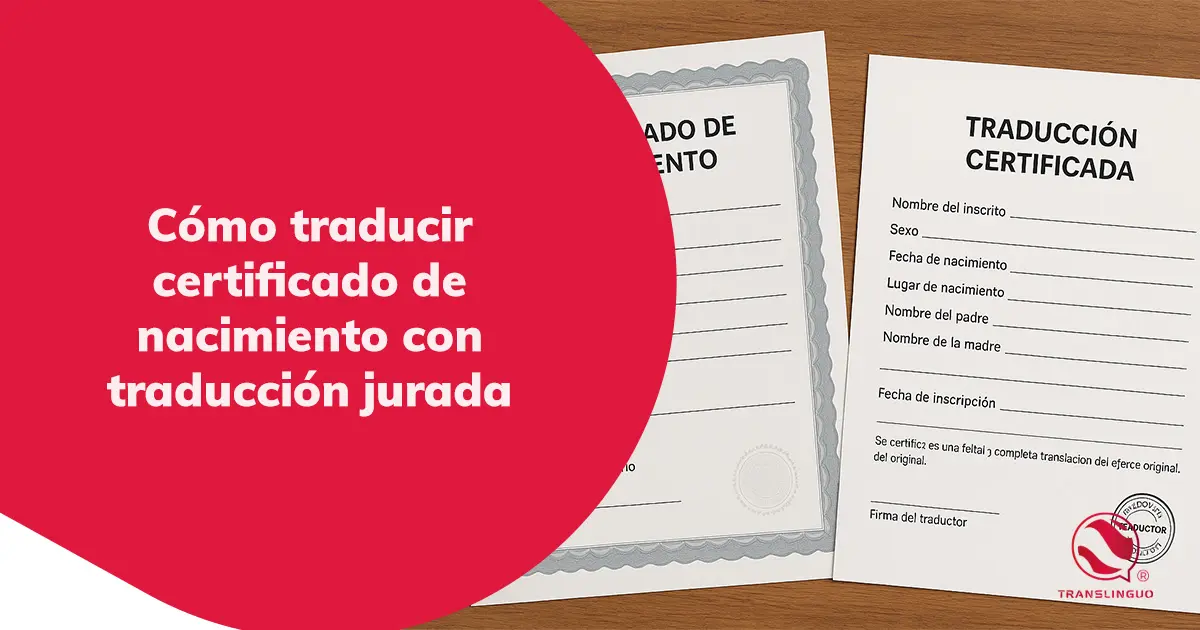
A certified translation is a translation accompanied by a statement confirming its accuracy, but it does not always have official legal validity. In this case, the certification may be issued by a translation agency or a professional translator, but without the specific legal authorisation that defines an officially recognised sworn translator.
This type of translation is usually sufficient for private or corporate contexts where quality assurance is required, but not official legal validation by a public authority.
Therefore, understanding when you need a certified translation is key to choosing the right level of service for your needs.
Common Cases for Certified Translation
Certified translation is commonly used for:
Internal company documents
International recruitment processes
Private tenders
Business-to-business contracts
Technical or financial reports
In these cases, a certified translation ensures accuracy and professionalism, but it does not replace a sworn translation when there is an explicit legal requirement.
You can find more information in our post on certified translations, where we explain what they are, when they are required and how to order one. At Translinguo Global, translation agency, we guide you throughout the entire process to ensure your translation meets the validity requirements you need.
What Is a Certified Translation and How Valid Is It?
A certified translation is a translation accompanied by a statement confirming its accuracy, issued by a professional translator or translation agency, but without official legal authorisation. Although it guarantees that the translation is accurate, it does not have the same legal recognition as a sworn translation.
This type of translation is usually accepted in private contexts, such as internal company processes, business agreements, reports, or corporate documentation. As explained by international organisations on professional translation practices, such as ISO (translation services) internal certification is not equivalent to official legal validation.
Sworn Translator vs Official Translator: What You Need to Know
One of the most common misconceptions is that any professional translator can provide a sworn translation. However, only an officially authorised sworn translator can provide one.
An official translator:
Has completed an official accreditation process
Is authorised by the relevant government authority
Can sign and stamp translations that have legal validity
By contrast, a professional translator who is not a sworn translator, even if highly experienced, cannot issue translations with official status for submission to public authorities.
This distinction is crucial for avoiding document rejections and delays in sensitive procedures.
Sworn Translation vs Certified Translation: Practical Differences
Before choosing a service, it is important to clearly understand the practical differences between the two types of translation.
Before looking at the comparison table, it is important to note that choosing the wrong type of translation—sworn translation or certified—may mean having to repeat the entire process, resulting in additional costs and wasted time.
| Aspect | Sworn Translation | Certified Translation |
|---|---|---|
| Legal validity | Official | Non official |
| Who issues it? | Sworn translator | Translator / translation agency |
| Signature and stamp | Mandatory | Optional |
| Administrative use | Yes | No |
| Business use | Sometimes | Yes |
This table highlights why it is so important to correctly identify when you need a sworn translation and when a certified translation is sufficient.
Can a Certified Translation Replace a Sworn Translation?
No. If an institution explicitly requires a sworn translation, a certified translation will be rejected, even if the linguistic quality is excellent. This is one of the most common misconceptions and one of the main reasons translations have to be redone.
Therefore, before requesting a quote, it is essential to confirm the document’s intended use and consult a specialised translation agency that can determine the correct type of translation required.
Why Is It Important to Understand This Difference Before Requesting a Quote?
Requesting a quote without knowing whether you need a sworn translation or a certified translation is one of the most common mistakes. This mistake can result in:
Incorrect quotes
Incorrectly estimated delivery times
Rejection of the document by the receiving authority
A specialised translation agency assesses the document’s intended use, the country and the receiving institution before recommending the appropriate type of translation.
Services such as official translation and legal translation allow these cases to be handled with complete confidence.
Sworn Translation in Legal and Administrative Contexts
In legal settings, sworn translation is not optional but a requirement. Courts, notaries, universities and public authorities require legally valid translations.
As set out in the regulations of the Spanish Ministry of Foreign Affairs, only translations carried out by sworn translators have official status in Spain.
Is a Sworn Translation Valid in Countries Other Than Spain?
A sworn translation carried out in Spain may be accepted in other countries, particularly within the European Union. However, some countries may require additional formalities, such as an apostille or legalisation of the original document.
According to the Hague Convention on Apostilles, an apostille certifies the authenticity of the original document, not the translation itself, although both are often linked in international procedures.
Sworn and Certified Translation: Two Distinct Services with Clear Purposes
Sworn translations and certified translations serve different purposes and are not interchangeable. Understanding the difference can save you time and money and help you avoid administrative issues.
Before requesting a quote, it is essential to identify the document’s intended use and seek advice from a specialised translation agency that can correctly determine when you need a sworn translation and when a certified translation is sufficient.
If you need a sworn translation, a certified translation, or are unsure which type of translation your procedure requires, working with a specialised translation agency can make all the difference. Discover how Translinguo Global can help with sworn translations, certified translations and legal translation, with complete confidence and legal validity.