

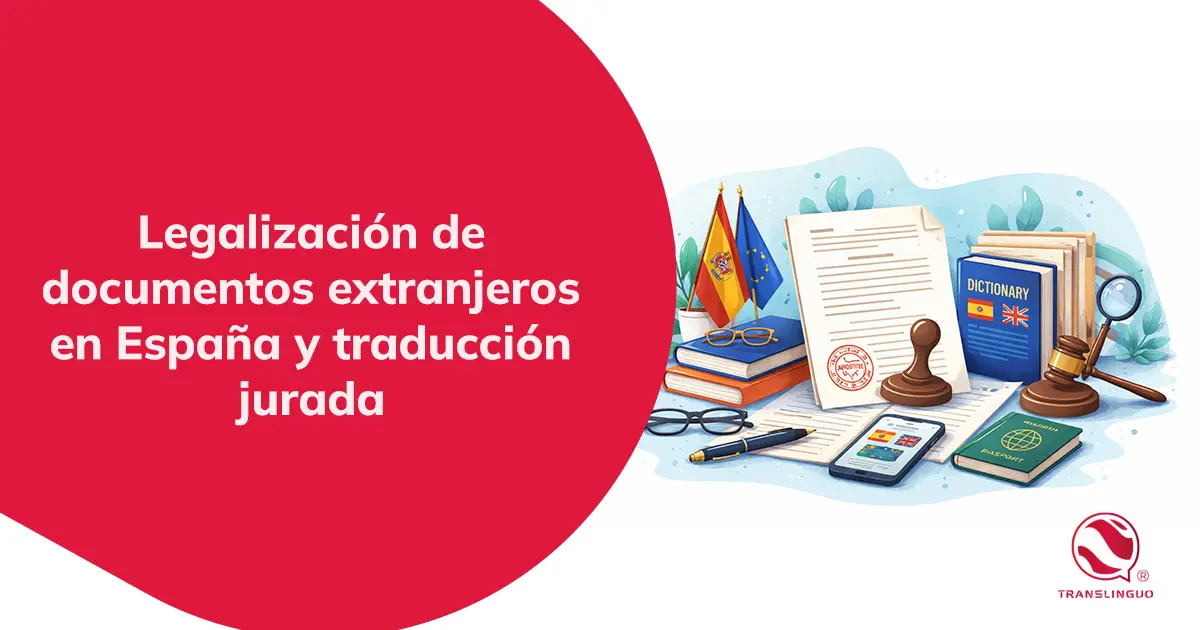
The legalisation of foreign documents in Spain is an essential step to ensure that a document issued outside the country is legally valid before Spanish public and private organisations. This process directly affects thousands of foreign nationals who need to regularise their status, access employment, have their qualifications recognised, or complete administrative and legal procedures.
However, one of the aspects that raises the most questions is the role of sworn translation in this process. Legalising a document is not always enough: if the document is not written in Spanish, it will need to be translated by a sworn translator for it to be officially accepted.
Understanding how legalisation works, when a translation is required and what type of translation is needed is key to avoiding delays, rejections and unnecessary costs.
What Is the Legalisation of Foreign Documents in Spain?
Legalisation is the process by which Spanish authorities recognise the authenticity of a public document issued abroad. In other words, it certifies that the signature and official capacity of the person who issued the document are valid.
This process is common for procedures such as:
- Residence and work permit applicatrions
- Immigration regularisation procedures
- Marriages and civil registry procedures
- Recognition of academic qualifications
- Employment and commercial procedures
The Spanish Ministry of Justice explains this procedure in detail in its section on legalisation and apostilles. The apostille procedure involves placing an Apostille or official certification on a public document, or an extension of it, to confirm the authenticity of the signature. It applies to public documents issued in a country that is a party to the Hague Convention of 5 October 1961, which removes the need to legalise foreign public documents that are intended to be used in another signatory country.
What Is the Legalisation of Foreign Documents in Spain?
Legalisation is the process by which Spanish authorities verify that a public document issued abroad is authentic and can have legal effect in Spain. This process verifies the signature and position of the official who issued the document, but not the content itself.
Legalisation vs The Hagye Apostille
Not all documents follow the same process. Depending on the country of issue, the document needs to be:
- Apostilled (if the country of issue forms part of the Hague Convention)
- Legalised through diplomatic or consular channels (if the country is not party to the convention)
What Is the Difference Between Legalisation and The Hague Apostille?
The Hague Apostille is a simplified form of legalisation that only applies between countries that are parties to the 1961 Hague Convention. If the country of origin is a party of the Convention, the document only needs to be apostilled. But, if its not a party to the Convention, a more complex consular legalisation process will be required.
Does an Apostille Always Replace Legalisation?
Yes, as long as the country that issued the document is a party to the Hague Convention. In that case, the apostille completely replaces traditional diplomatic legalisation and is sufficient for the document to be recognised in Spain.
How to Apostille Documents in Spain: Step by Step
The process for apostilling documents in Spain depends on where the document was issued and its type. Not all documents are apostilled by the same authority, which can cause a lot of confusion for applicants.
Generally speaking:
- Judicial and administrative documents are apostilled through the Ministry of Justice.
- Notarial documents are apostilled through the relevant Notarial Association.
- Academic documents may require additional steps before they can be apostilled.
Currently, Spain allows this procedure to be carried out in person and, in many cases, through an electronic apostille, which can significantly speed up the process. This digital system is particularly useful for foreign nationals who need to submit documents within tight deadlines.
However, a common mistake is having the wrong document apostilled, such as an invalid copy or a document missing the necessary prior stamps. This can mean having to restart the entire process.
Apostille and Sworn Translation: Two Essential Requirements
A key point that often causes confusion is thinking that having a document apostilled is enough to submit it in Spain. However, if the document is written in another language, a sworn translation is still required.
The correct order is always:
- Issuance of the original document
- Apostille or legalisation, depending on the country
- Sworn translation into Spanish
The translation should be carried out after the apostille, as the sworn translator must include in the translation all the stamps, annotations and apostilles appearing on the original document. Cualquier alteración de este orden puede provocar que el documento sea rechazado por la administración.
Which Comes First: The Apostille or the Sworn Translation?
The original document must always be apostilled or legalised first, followed by the sworn translation. This is because the translator must include in the translation all the stamps, apostilles and annotations appearing on the document.
The Role of Translation in the Legalisation of Documents
Once the document has been legalised or apostilled, it must be understandable to the Spanish authorities. If it is written in another language, this is where a sworn translation comes into play.
Spanish authorities only accept sworn translations for official administrative procedures. Simple or certified translations without official status have no legal validity.
As explained in “Sworn Translation vs. Certified Translation,” only a translation carried out by a sworn translator appointed by the Ministry of Foreign Affairs is valid for immigration authorities, civil registries, universities, and other official bodies.
What Is a Sworn Translation and Why Is It Required?
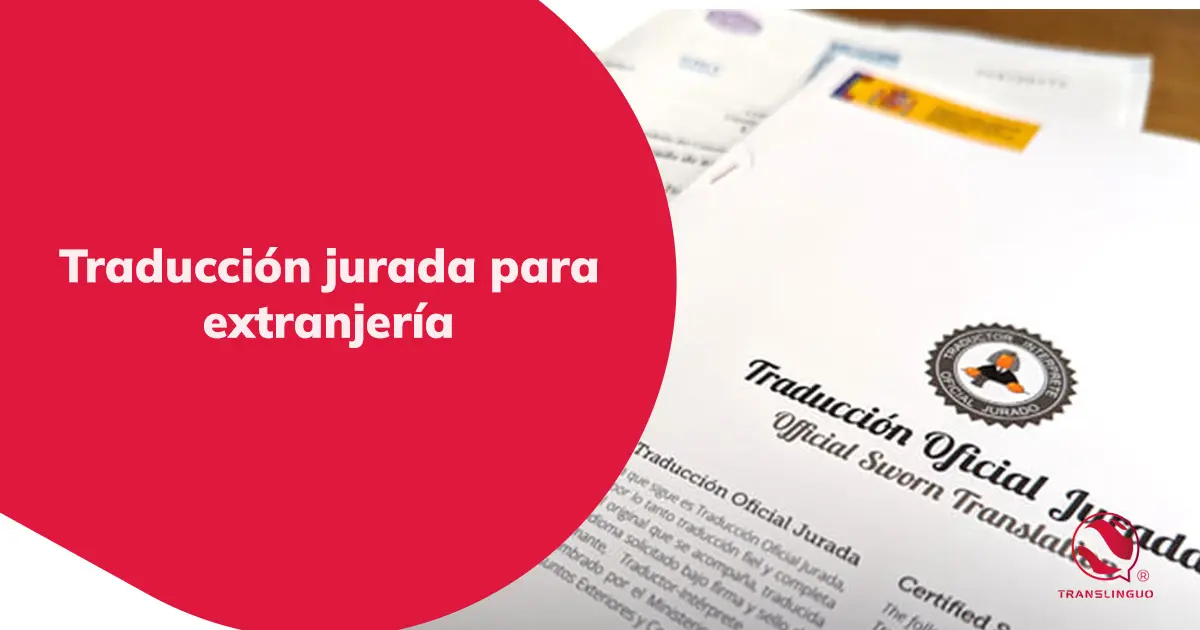
A sworn translation is an official translation signed and stamped by a sworn translator, certifying that the content accurately reflects the original document.
This type of translation:
- Is legally valid throughout Spain
- Includes a stamp, a signature and an official certification
- Se presenta junto al documento original legalizado
Authorities such as the Immigration Office, the Ministry of Inclusion, and universities require sworn translations to ensure that the content has not been altered.
For this reason, sworn translation services are essential for any foreign national who needs to submit official documents.
Does a Sworn Translation Have an Expiry Date?
La traducción jurada no caduca como tal, pero el documento original sí puede tener una vigencia limitada. For example, criminal record certificates often need to be recent, depending on the requirements of the authority receiving them.
¿Puedo presentar copias escaneadas o digitales de documentos apostillados?
It depends on the authority. For many initial applications, digital copies are accepted, but the final decision may require the original apostilled document together with its sworn translation in paper or official format.
Documentos más habituales que requieren legalización y traducción
Before looking at the comparison table, it is important to understand that not all procedures require the same documents. However, some documents are commonly required for most administrative procedures.
The most common include:
- Civil status certificates
- Criminal record certificates
- Academic documents
- Employment contracts
- Identity documents
If issued abroad, these documents will generally require legalisation and a sworn translation.
| Document | Legalisation required? | Sworn translation required? |
| Birth Certificate | Yes | Yes |
| Criminal Background Checks | Yes | Yes |
| Passport | Not always | Yes, in many procedures |
| Employment contract | Depends on the procedure | Yes |
| Academic certificate | Yes | Yes |
Translation of Criminal Records and Its Importance for Immigration Procedures
Criminal record translations are one of the most important documents in residency and immigration procedures. Spanish authorities require this certificate to check that the applicant has no criminal record in their country of origin.
This document needs to be:
- Legalised or apostilled
- Translated by a sworn translator
One of the most critical aspects of the regularisation process for foreign nationals in Spain is the translation of official documents. Many of the documents required by the Immigration Office are issued in the applicant’s country of origin. If they are not in Spanish, they must be submitted with a sworn translation that is legally valid in Spain.
Translation of Birth and Civil Status Certificates
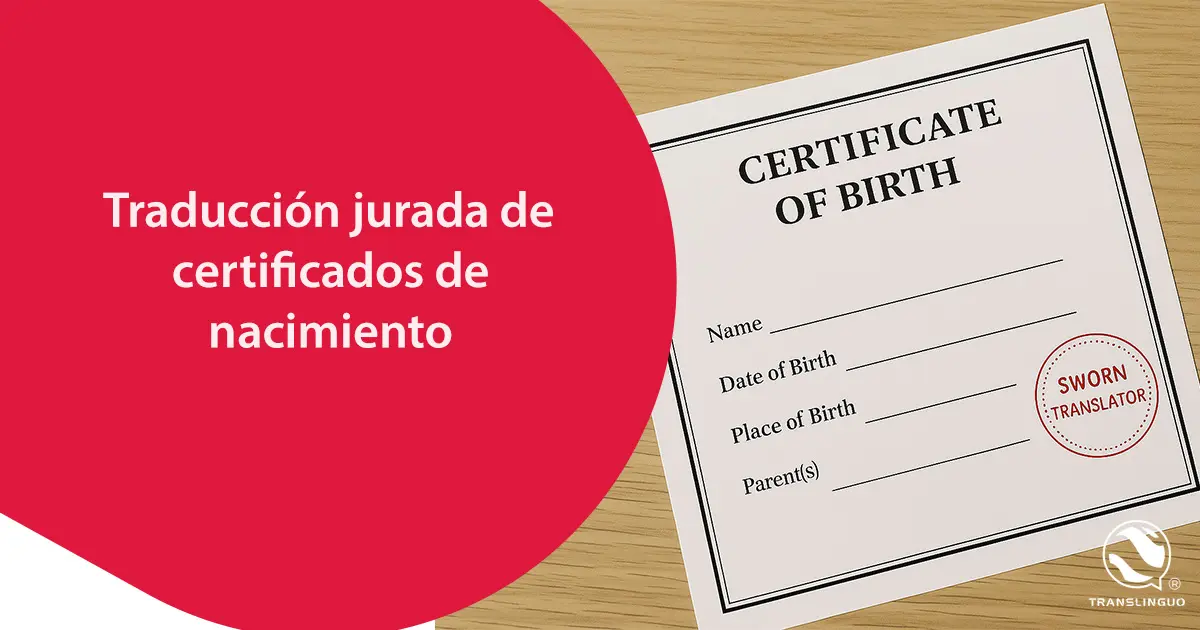
The translation of a birth certificate is essential for procedures such as:
- Nationality applications
- Marriages
- Civil registry registrations
In those procedures, the certificates must always be legalised and translated by a sworn translator.
As an ISO-certified translation agency with a network of sworn translators in multiple jurisdictions, we manage the official translation of documents quickly and in full compliance with regulations. If required, we can also handle legalisation and apostille services. Everything is done online, securely and with expert human support.
The Role of a Translation Agency in These Processes
Legalising and translating documents are not separate processes. They require coordination, knowledge of the relevant regulations, and experience.
A specialised translation agency such as Tranglinguo Global offers:
- Certified sworn translators
- Review of requirements for each procedure
- Support throughout the entire process
- Prevention of formal errors that could lead to rejection
This is especially important in immigration procedures, where a single mistake can delay an application for months.
Why Is It Advisable to Choose a Specialised Translation Agency?
Because a translation agency specialising in sworn translations and official documents can check the requirements of the procedure in advance, confirm whether the document needs an apostille or legalisation, and ensure the translation is handled correctly, helping to avoid errors that could cause delays or rejection.
Legalisation and Translation: Two Essential Steps
The legalisation of foreign documents in Spain and sworn translation are inseparable processes when it comes to official procedures. Legalising a document without translating it, or translating it without legalising it, can result in invalid documents and the need to repeat the process.
Working with a specialised translation agency can save time, prevent errors, and help ensure that your documents are accepted without unnecessary delays.
If you need to legalise and translate documents for procedures in Spain, choose a translation agency with experience in immigration and sworn translation. At Translinguo Global, we help you submit your documents with full legal compliance. Request your free translation quote from our translation agency.