

Audiovisual Translation
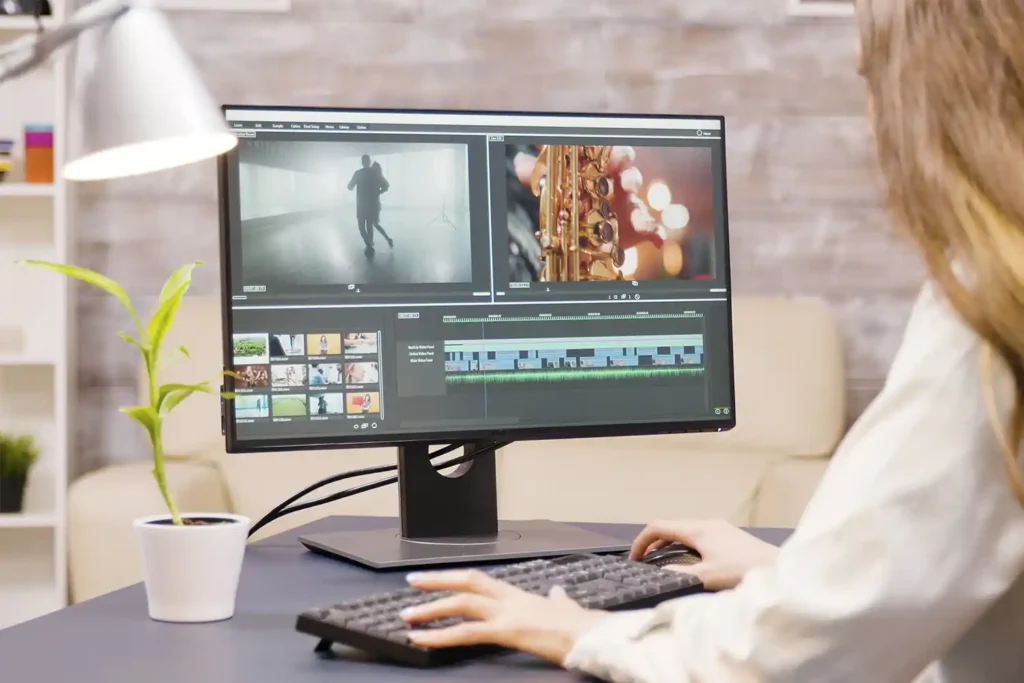
At Translinguo Global, we are an official translation agency specialising in video translation and localisation. We work with the best native translators and dubbing professionals to ensure that your audiovisual content retains its original tone, style and message in any language and market.
If you need to translate videos or perform professional video dubbing to expand your content internationally, at Translinguo Global we offer you a personalised solution tailored to your needs.
Translation of Scripts and Subtitles
Professional Voice-Over and Dubbing with native voices
Transcription by native translators
Professional subtitling adapted
Professional Audiovisual Translation for Businesses and Content Creators
Audiovisual translation involves much more than simply converting audio or subtitles from one language to another. For content to be effective and resonate with the target audience, it is essential to adapt every aspect of the video to the cultural and linguistic context of the target market.
Our team of audiovisual translation and localisation experts works with advanced tools to ensure that audio synchronisation, dubbing quality and subtitle translation are accurate and professional.
Types of Audiovisual Translation We Offer
At Translinguo Global, a translation agency, we understand that each type of audiovisual content has its own needs and challenges. That is why we tailor our audiovisual translation service to different formats and communication objectives. We use advanced technology and native translators with extensive experience in video translation, subtitling, transcription and more.
Video Dubbing
Video dubbing involves replacing the original audio with a new recording in the target language. We select professional voice-over artists who match the tone, personality and cultural context of the original content. We ensure that the dubbing sounds natural and is perfectly synchronised with the characters' lip movements and facial expressions.
Professional Voice-Over
Voice-over involves adding a translated voice track over the original audio. It is a technique widely used in documentaries, informational videos, and corporate content.wpml_linebreak We work with native speakers who adapt their tone and speed of speech to ensure that the message is conveyed clearly and naturally.
Professional Subtitling
Subtitling is a key technique in audiovisual translation that allows viewers to follow the content in their native language.
We offer:
- Subtitled in several languages.
- Closed captions for accessibility.
- Adaptation to the rules and standards of each platform (YouTube, Netflix, Amazon).
- Precise synchronisation between audio and text.
Video Localisation
Video localisation goes beyond simple translation. We adapt audiovisual content so that it makes sense and resonates culturally in the target market.
This includes:
- Adaptation of cultural references.
- Conversion of measurements and currency.
- Modification of graphic elements and text on screen.
- Synchronisation of dialogue and sound effects.
Audio description for accessibility
Audio description is an essential resource for ensuring that people with visual impairments can access audiovisual content. We describe scenes, movements, and visual changes to make the experience complete and immersive.
Our Audiovisual Translation Clients






At Translinguo Global, we offer audiovisual translation services to companies and content creators looking to expand their audience and offer an authentic experience in multiple languages.
If you need to translate or adapt audiovisual content, Translinguo Global offers you a professional solution tailored to your sector.
Audiovisual Translation Agency
We are an official translation agency with extensive experience in video translation and audiovisual content localisation. Our team of translators and dubbing professionals work with the best tools and technologies to offer an accurate service tailored to each client’s needs.
We work with advanced localisation and computer-assisted translation (CAT) tools to optimise delivery times and ensure consistency across all projects.
Why choose Translinguo Global for audiovisual translation?
Native video translator
Video subtitling
Best rate for audiovisual translation
ISO Quality Certificates
Audiovisual Translation Quote:
Fast and Personalized
The cost of audiovisual translation depends on several factors, such as the length of the video, the target language, and the type of service (dubbing, subtitling, voice-over, etc.).
Request your audiovisual translation quote today and receive a quick and effective solution.
Frequently Asked Questions about Software Translation (FAQs)
What is the difference between audiovisual translation and video localization?
Audiovisual translation involves converting the textual content of a video (dialogues, subtitles, titles, and graphics) from one language to another, ensuring that the message is clear and accurate. It focuses primarily on the linguistic and technical accuracy of the translation.
On the other hand, video localisation goes beyond simple translation, as it adapts the content to the cultural, social and technical characteristics of the target market. Localisation involves changing cultural references, adapting specific terms, adjusting images or graphics containing text, and ensuring that the tone and style of the video are perceived as natural by the local audience.
For example, an advertising video localised for the Japanese market may require modifying colours, cultural references, or even changing background images to better align with the expectations of the Japanese audience.
What advantages does professional audiovisual translation offer over machine translation?
Although machine translation tools have improved in recent years, they still cannot match the quality of a professional audiovisual translation done by a specialised video translator.
The main advantages of professional translation are:
✅ Cultural adaptation: Machine translation cannot capture cultural nuances, puns, or local references.
✅ Audio and text synchronisation: A professional translator ensures that dialogue and subtitles are correctly synchronised with the video.
✅ Consistency and style: Professional translation maintains the tone and style of the original content.
✅ Error correction: Machine translations often contain grammatical or contextual errors, which can negatively affect audience perception.
Professional audiovisual translation ensures that content is natural, accurate and tailored to the target market, enhancing the viewer’s experience and the impact of the message.
What is the importance of video subtitling in audiovisual translation?
Video subtitling is a key part of audiovisual translation, as it makes content accessible to audiences who speak different languages or to people with hearing impairments.
Subtitles must meet several requirements to ensure an optimal user experience:
- Precise synchronisation: Subtitles should appear and disappear at the exact moment the words are spoken.
- Appropriate length and speed: Subtitles should be short enough for viewers to read comfortably without missing visual information from the video.
- Cultural adaptation: Subtitles should reflect the tone and context of the original message, avoiding literal translations that could cause confusion.
- Format and style: Subtitles must have a clear design and be easily legible, complying with the rules and standards of each platform (Netflix, YouTube, Amazon Prime, etc.).
Professional subtitling ensures that the message of the video is conveyed correctly, enhancing the viewer’s experience and increasing the accessibility of the content.
What is the difference between dubbing and voice-over in audiovisual translation?
Both dubbing and voice-over are audiovisual translation techniques that allow the spoken content of a video to be conveyed in a different language, but there are important differences between the two:
- Dubbing: Dubbing involves completely replacing the original audio with a new recording in the target language. Lip movements and facial expressions are precisely synchronised to make the dubbing sound natural. It is widely used in films, series and video games.
- Voice-over:
Voice-over involves adding a translated audio track over the original track, which remains in the background at a low volume. It is commonly used in documentaries, corporate videos and news reports.
Dubbing provides a more immersive and natural experience for the viewer, while voice-over maintains the tone.
What are the challenges of translating technical or corporate videos?
The translation of technical or corporate videos involves several additional challenges due to the specialised terminology and format of the content. Some of the main challenges include:
✅ Technical accuracy: Technical terms must be translated accurately to avoid misunderstandings or errors.
✅ Consistency: If the video is part of a series or campaign, it is essential to maintain consistency in terminology across all content.
✅ Format and design: If the video contains graphics or overlaid text, the design must be adjusted so that the translated text fits correctly.
✅ Cultural adaptation: The translation must reflect cultural differences in terms of tone, formal/informal language and specific references.
Professional and specialised audiovisual translation ensures that technical content is understandable and appealing to the target audience, while maintaining accuracy and professionalism.
Why is video localization important for a company's international expansion?
Video localisation enables companies to adapt their audiovisual content to different international markets, thereby increasing their reach and brand acceptance.
Effective localisation involves:
- Adaptation of cultural references so that the content is natural and relevant to the target market.
- Conversion of units of measurement, currency, and dates to align them with local conventions.
- Replacement of images or symbols that may be culturally inappropriate or incomprehensible in the target market.
- Adapting the tone and language so that the message is compelling and appealing to the local audience.
A company that invests in video localisation can significantly increase its customer base and improve its brand perception in international markets.
What tools are used in video translation and localization?
At Translinguo Global, we use advanced localisation and computer-assisted translation (CAT) tools to ensure accuracy and consistency in all audiovisual translation projects.
Among the tools we use are:
🛠️ Adobe Premiere Pro: For editing and synchronising subtitles and dubbing. 🛠️ Final Cut Pro: For professional video editing and technical adaptation.
🛠️ SDL Trados Studio: For managing translation and maintaining terminological consistency.
🛠️ MemoQ: For collaborative translations and teamwork.
🛠️ Aegisub: For creating and editing subtitles accurately.
Tools enable us to maintain high quality standards and ensure that the translated content is clear and accurate.
How long does it take to translate and localize a video?
The time required to complete an audiovisual translation and video localisation project depends on several factors:
✅ Video length: A short video can be translated in a few hours, while a documentary or film may take several days.
✅ Number of languages: If the video needs to be translated into several languages, the process may take longer.
✅ Content complexity: Videos with technical terminology or complex cultural references may require more time to ensure accurate adaptation.
✅ Type of service: Dubbing and voice synchronisation usually take longer than subtitling.
At Translinguo Global, we work to tight deadlines and guarantee on-time delivery without compromising on quality.